
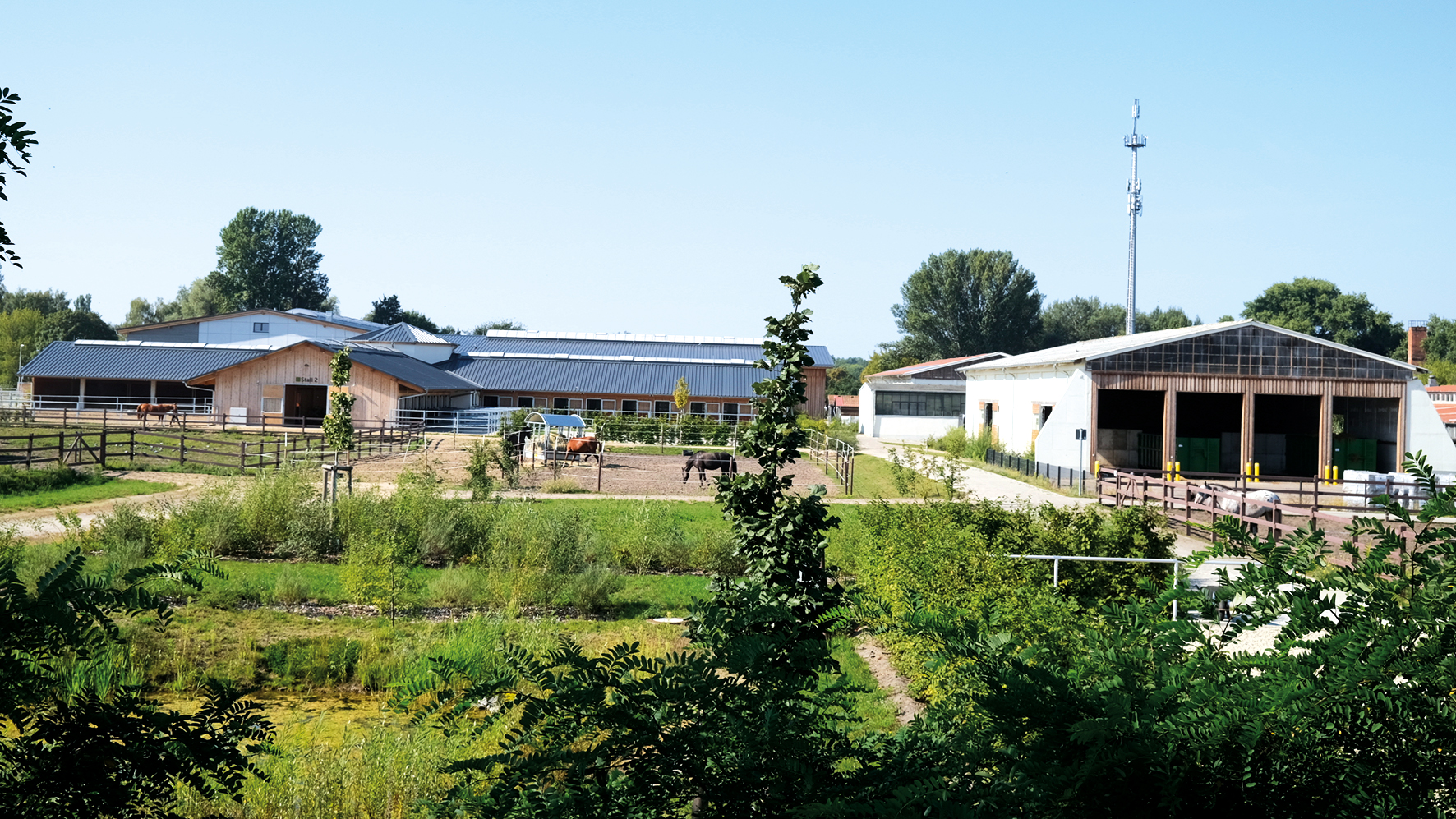
At the Inclusive Equestrian Sport and Riding Therapy Centre Berlin-Karlshorst (RBO), you sense straightaway that something special is happening. Here, horses help children, teenagers and adults to overcome their fears and gain trust – in themselves and in others. But studies by the German Sport University Cologne show that the benefits of hippotherapy extend well beyond riders’ positive feelings while in the saddle. Interaction with horses can measurably improve people’s mobility, sense of balance and social integration.
The atmosphere in the RBO riding hall in Berlin’s Karlshorst district shifts between quiet concentration and boisterous emotion. Phases of hippotherapy, with its calm focus on the transfer of the movement of the horse’s steps to the rider, alternate with the loud voices of happy children being led on horseback in the centre’s curative education programme for school pupils – and with adults in therapy sessions, immersed in the here and now, experiencing the soothing effect of the horses.
The variety of the horses employed by the RBO is matched by the diversity of the people who benefit from the horse-assisted therapy offered here – from children who have suffered infantile brain damage to teenagers with neuromuscular diseases, to adults with multiple sclerosis, autism or cognitive impairments. Many of the clients have tried numerous other therapies, often with the additional challenges of concentration difficulties and lack of motivation.
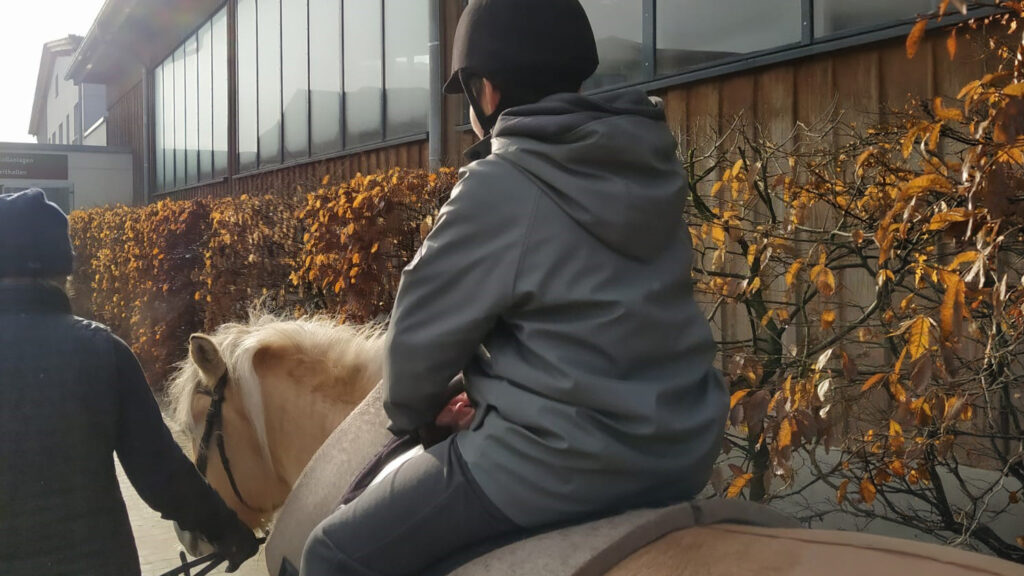
On horseback, it’s different. ‘The movement is playful, the motivation comes all on its own – you’re in contact and in action with another living being, and you feel that creature directly,’ says Christina Krämer, director of the Therapeutic Riding department at the RBO. The centre takes care that the horses feel good in their job. Their therapeutic work is balanced out by other kinds of labour as well as ample free time in the herd. The official guidelines for animal welfare in equestrian sport and horse keeping and the by-laws of the German Board of Trustees for Therapeutic Riding lay out the ground rules for the horses’ working and living conditions.
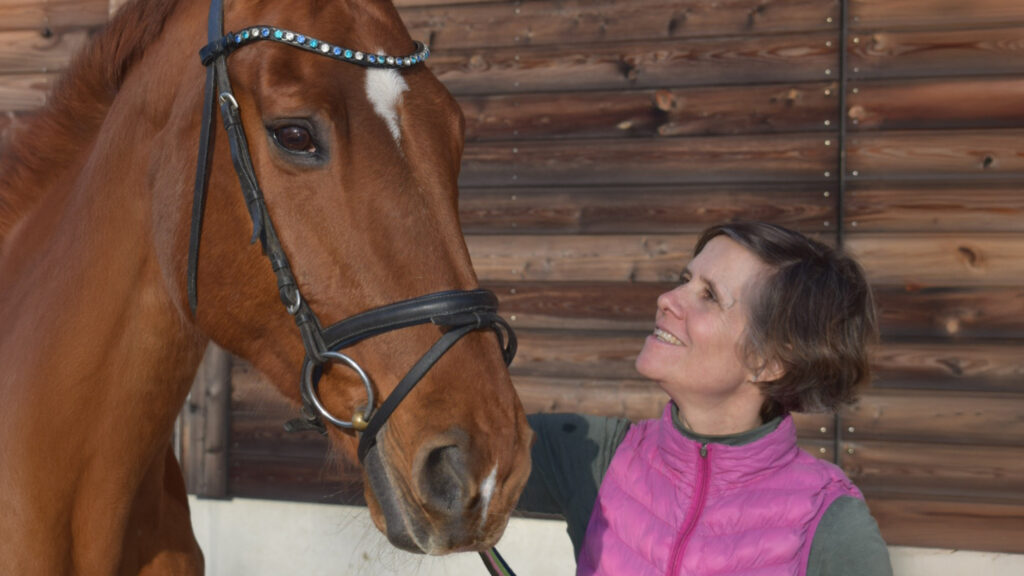
One example of the well-being of the horses at the centre is Loki. ‘All on his own, he comes over to the fence as soon as he sees his patient in the wheelchair – even without a carrot,’ Krämer says. ‘And he lets the client lead him from their wheelchair, no matter their condition.’
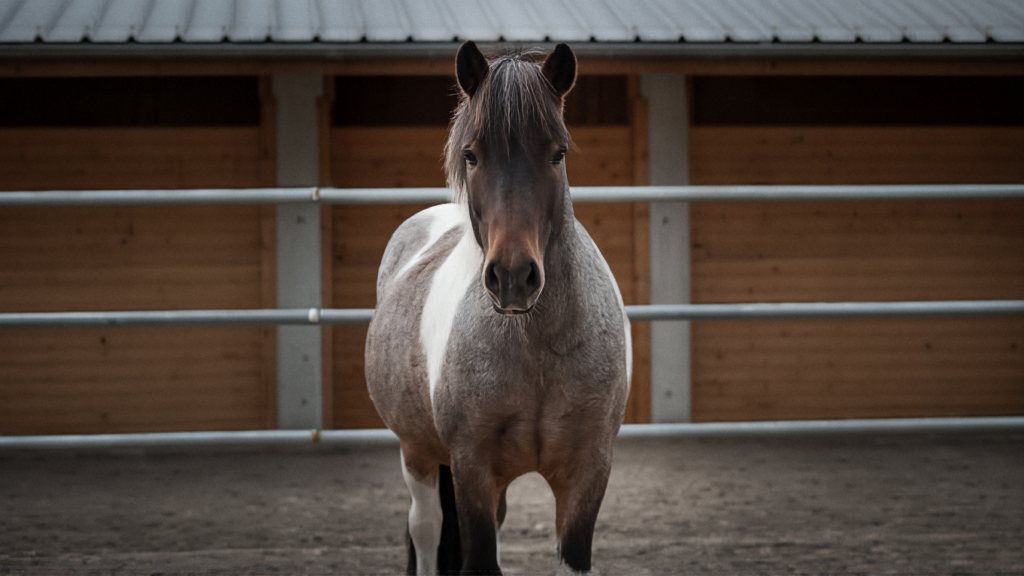
In hippotherapy – physiotherapy with horses – the horses transfer around 100 three-dimensional movement impulses to the rider’s body with each step. These movements are similar to the pattern of the human gait. They engage the rider’s central and peripheral nervous system, and the pelvic and core muscles compensate to maintain the rider’s balance.
Before health insurance companies will pay for hippotherapy, studies are necessary – studies like those carried out by the German Sport University Cologne. There, researchers accompanied people with multiple sclerosis for months at a time. Using tests from the World Health Organization (WHO), they measured participants’ mobility, balance and fatigue, and their integration in everyday activities. Their findings: hippotherapy can improve people’s movement and inclusion.
The current follow-up study, MS Hippo II, began in 2024 and is running until June 2026. Under the direction of the German Sport University Cologne and in cooperation with the Research Institute for Inclusion through Movement and Sport (FIBS), it is investigating how long-lasting these effects are and what factors especially influence the success of the therapy. (The study is financed by the Willi Drache Foundation, the Gold Kraemer Foundation, the German Board of Trustees for Therapeutic Riding and the German Multiple Sclerosis Society.)

Isabel Stolz, a research associate at the Institute of Movement and Neurosciences at the German Sport University Cologne, conducts studies on improving the measurability of hippotherapy. Jointly with the FIBS and professionals from therapeutic practice, she developed the EQUITEDO app, whose name is an abbreviation for ‘equi-therapy documentation’. Riding therapists use the app to record the progress of their clients. And it helps riding therapy centres like the RBO to better demonstrate successes to external sponsors, doctors and funding partners and to more effectively solicit financing.
‘Before we developed the app, we saw pages and pages of handwritten notes from therapists on therapy results that couldn’t be systematised or communicated in a structured manner,’ Stolz says. ‘That was unfortunate, because outstanding therapeutic effects were being achieved, but they couldn’t be understood by third parties. EQUITEDO can serve as a bridge in communication within the healthcare system and in communicating with clients.’ The staff in Karlshorst is familiar with the app as well. ‘We’re in regular contact with Isabel Stolz,’ says the RBO’s Krämer.
The positive effect horses can have on people is being made palpable through what’s happening in Karlshorst – ‘where every hoofbeat tells a story of hope, resilience and joy.’ And these aren’t just words on the RBO’s website. They are lived out daily in the cooperation between humans and horses in Karlshorst. A cooperation that strengthens clients’ self-confidence, enables encounters on equal terms and lets people experience the power that lies in a single step – or hoofbeat.
By the way: the Futurestories Foundation sponsors the RBO’s curative education work with a school class as well as the hippotherapy of a boy with an impairment of the central nervous system.